Loading…
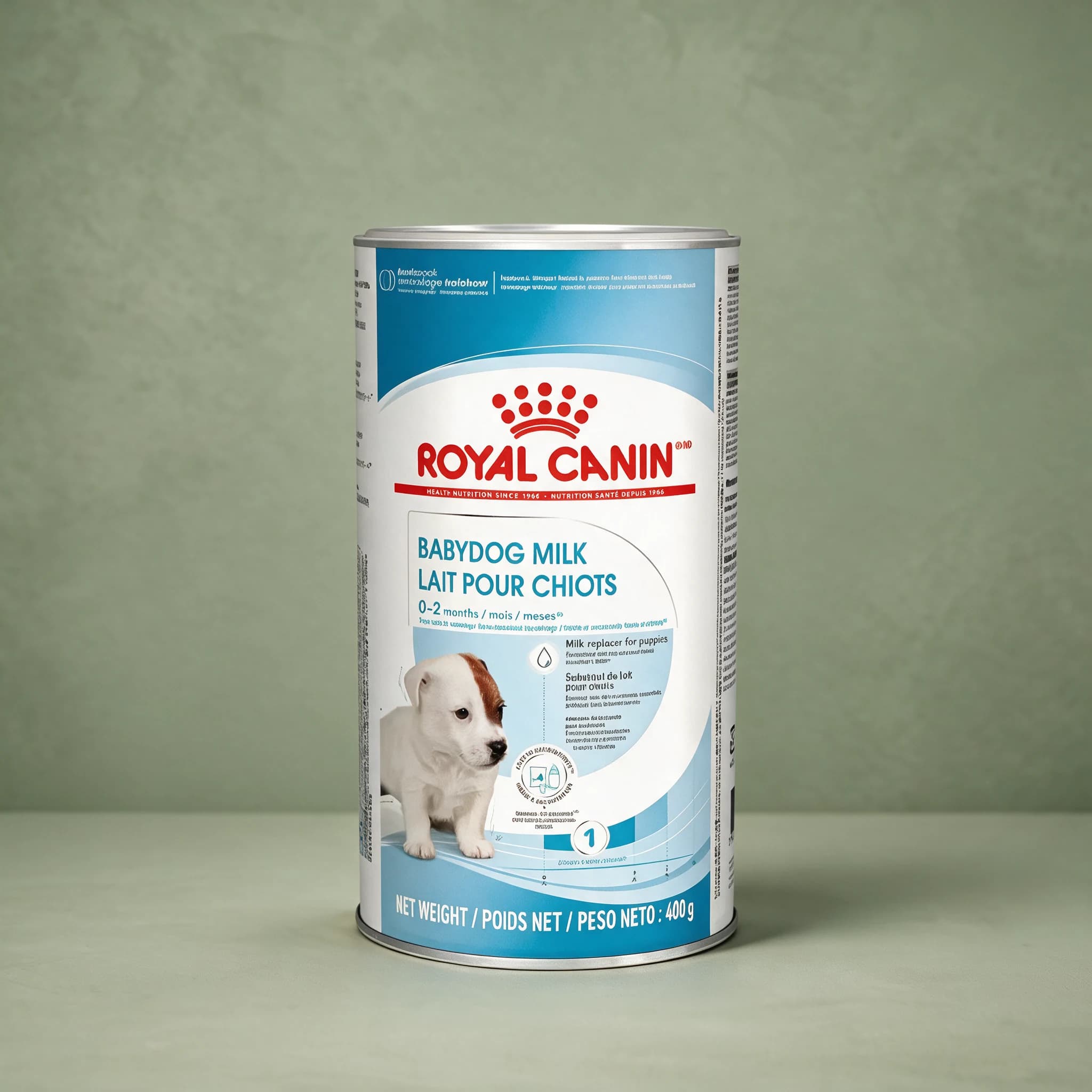
For an orphaned litter, or a mother who can't feed them all.
This is the product you hope not to need and are very glad to have at two in the morning. An orphaned litter, a bitch who has had a caesarean, mastitis, or simply too many puppies for the milk available — in all of those, hand-rearing starts immediately and cow's milk will not do it.
The formula is built to approximate bitch's milk rather than to be a generic pet milk: 33% protein and 39% fat, with DHA at 1 g/kg from fish oil for brain and vision development, arachidonic acid from fungal oil, taurine at 2.2 g/kg, and fructo-oligosaccharides for a gut that has never digested anything. Newborn puppies need feeding every three hours around the clock in the first week, which is why the table below is stated per feed.
Milk retentate, milk fat, refined palm oil (from sustainable sources), whey protein, refined soya oil, refined coconut oil, minerals, fructo-oligosaccharides (0.5%), fish oil (source of DHA), fungal oil (source of arachidonic acid). Additives (per kg) — Nutritional additives: Vitamin A 25,000 IU · Vitamin D3 1,500 IU · 3b103 (Iron) 100 mg · 3b201 (Iodine) 4 mg · 3b405 (Copper) 15 mg · 3b503 (Manganese) 80 mg · 3b605 (Zinc) 190 mg · 3b810 (Selenium) 0.43 mg · Taurine 2.2 g. Antioxidants.
Store the tin in a cool, dry place and seal it after every use. Make each feed fresh; do not keep made-up milk. Feed the puppy on her front with her head level — **never on her back like a human baby**, because milk goes into the lungs and that is usually fatal. Keep her warm, at 30–32 °C in the first week; a cold puppy cannot digest. Stimulate her to toilet with a warm damp cloth after every feed until about three weeks. Hand-rearing is demanding and things go wrong quickly — stay in touch with your vet, and get any puppy who stops gaining weight seen the same day.
| 33% |
| Crude fat | 39% |
|---|
| Crude ash | 6% |
|---|
| DHA | 1 g/kg |
|---|
| Moisture (max, RSA) | 3.5% |
|---|
| Your dog weighs | Activity | Per day | A Tin bag lasts |
|---|---|---|---|
| Tin | Week 1 · Mini (1-10kg) | 8 g | about 50 days |
| Tin | Week 2 · Mini (1-10kg) | 15 g | about 26 days |
| Tin | Week 3 · Mini (1-10kg) | 21 g | about 19 days |
| Tin | Week 4 · Mini (1-10kg) | 26 g | about 15 days |
| Tin | Week 1 · Medium (11-25kg) | 16 g | about 25 days |
| Tin | Week 2 · Medium (11-25kg) | 25 g | about 16 days |
| Tin | Week 3 · Medium (11-25kg) | 38 g | about 10 days |
| Tin | Week 4 · Medium (11-25kg) | 51 g | about 7 days |
| Tin | Week 1 · Maxi (26-44kg) | 22 g | about 18 days |
| Tin | Week 2 · Maxi (26-44kg) | 38 g | about 10 days |
| Tin | Week 3 · Maxi (26-44kg) | 54 g | about 7 days |
| Tin | Week 4 · Maxi (26-44kg) | 78 g | about 5 days |
| Tin | Week 1 · Giant (45kg+) | 30 g | about 13 days |
| Tin | Week 2 · Giant (45kg+) | 45 g | about 8 days |
| Tin | Week 3 · Giant (45kg+) | 63 g | about 6 days |
| Tin | Week 4 · Giant (45kg+) | 93 g | about 4 days |
Millilitres **per feed**, not per day — multiply by the feeds column. Read down from the size the puppies will grow into. Mix 10 ml of powder with 20 ml of low-mineral bottled water at about 70°C and serve lukewarm. Fresh water alongside once they're on solids.
No reviews yet — be the first to review Royal Canin Babydog Milk.