Loading…
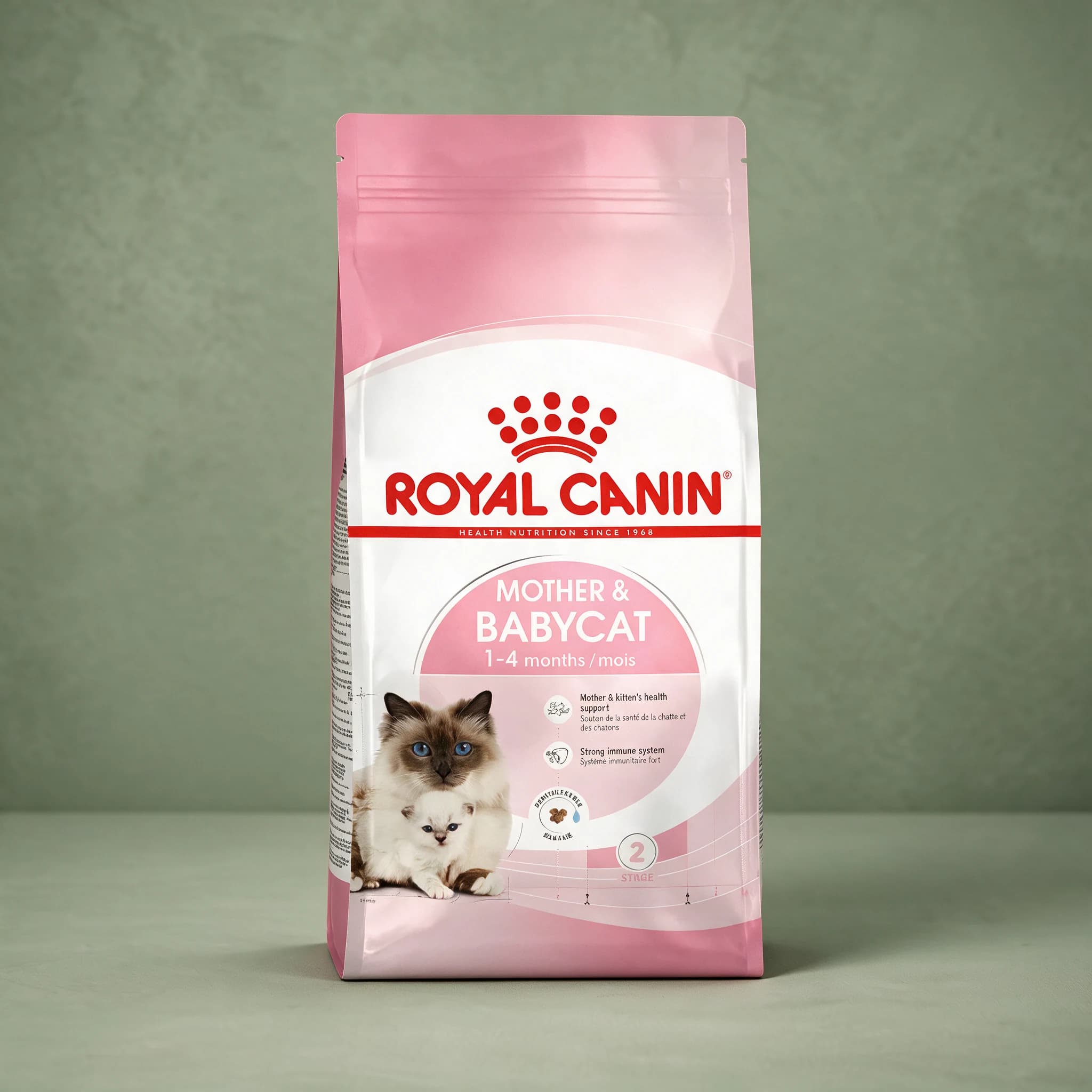
Soft enough to rehydrate. First solid food, essentially.
Weaning is a fiddly fortnight. A kitten of four or five weeks has milk teeth that barely work, a gut that's only ever handled milk, and no idea that the stuff in the bowl is food. Most of the first few attempts end up on her face.
The kibble here is ultra-soft and rehydrates quickly, so it can be softened to a mush at first and offered dry as she gets the hang of it — one food across the whole transition rather than three. Fat runs high at 25% because she needs concentrated energy in a very small stomach. Highly digestible proteins and prebiotics suit a gut that's just met solid food, an antioxidant complex including vitamin E supports natural defences she's no longer getting from her mother's milk, and DHA supports brain and vision development at the stage it matters most. The same concentration works for the queen herself through pregnancy and nursing, when her own energy need roughly doubles.
Dehydrated poultry protein, rice, maize, animal fats, vegetable protein isolate (L.I.P. — protein selected for its very high digestibility), maize gluten, hydrolysed animal proteins, beet pulp, vegetable fibres, minerals, fish oil, soya oil, yeasts and parts thereof, fructo-oligosaccharides, mannan-oligosaccharides, psyllium husks and seeds, marigold extract (source of lutein).
Store in a cool, dry place, sealed. Use within six weeks of opening. Start by soaking the kibble in warm water to a porridge consistency and reduce the water over a week or two until she's eating it dry. Leave it down in a shallow saucer where she can reach it. For a pregnant or nursing queen, feed free-choice from the last third of pregnancy through weaning — she cannot easily overeat at that point. Fresh water, always, from the moment she's on solids.
| Crude protein | 34% |
|---|---|
| Crude fat | 25% |
| Crude fibre | 2.3% |
| Crude ash | 7.4% |
| Calcium | 1.1% |
| Phosphorus | 0.9% |
| Omega-6 fatty acids | ~4.5% |
| Omega-3 fatty acids | ~1% |
| EPA/DHA | ~0.35% |
| Your dog weighs | Activity | Per day | A 4 kg bag lasts |
|---|---|---|---|
| 1 month | 0.4 kg — Dry only | 26 g | about 153 days |
| 1 month | 0.4 kg — Dry + ½ pouch | 5 g | about 800 days |
| 2 months | 1 kg — Dry only | 45 g | about 88 days |
| 2 months | 1 kg — Dry + ½ pouch | 22 g | about 181 days |
| 3 months | 1.3 kg — Dry only | 57 g | about 70 days |
| 3 months | 1.3 kg — Dry + 1 pouch | 13 g | about 307 days |
| 4 months | 2 kg — Dry only | 61 g | about 65 days |
| 4 months | 2 kg — Dry + 1 pouch | 16 g | about 250 days |
| Gestating queen | 4 kg — Dry only | 62 g | about 64 days |
| Gestating queen | 4 kg — Dry + 1 pouch | 16 g | about 250 days |
A guide, not a rule. Kittens this age eat little and often — four or five small meals a day, or simply leave softened food available. A gestating or nursing queen should be fed free-choice; the range shown rises through pregnancy into lactation. Fresh water, always.
No reviews yet — be the first to review Royal Canin Feline Mother & Babycat Dry Cat Food.